ServiceNow vs. Atlassian Service Collection: Do You Really Need That Much Complexity to Manage Services Effectively?
ServiceNow’s strength is also its weakness: its complexity ends up holding back change.
In this article, we provide an in-depth comparison of ServiceNow vs Atlassian Service Collection
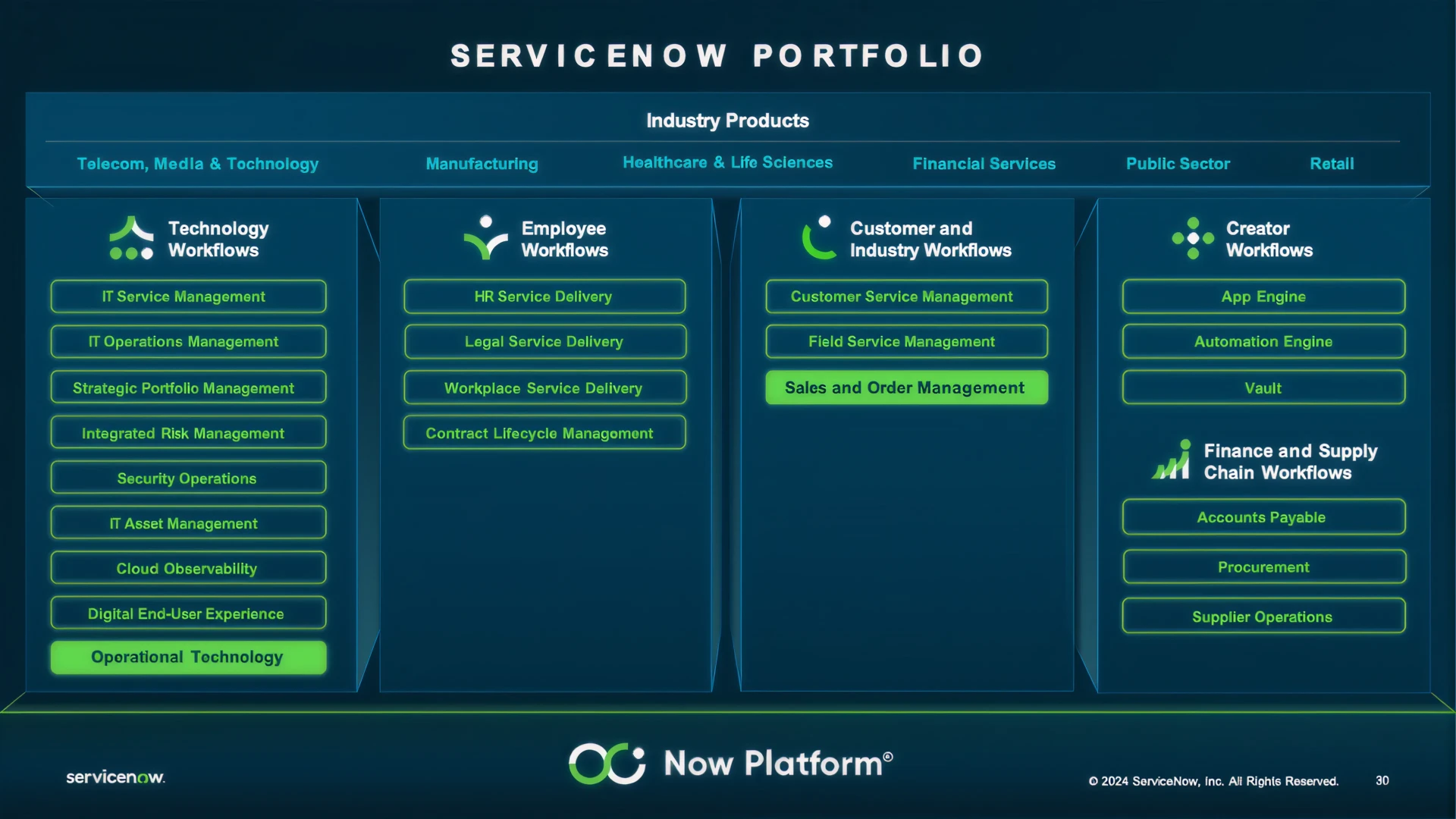
ServiceNow didn’t become the standard platform for digital workflow management by chance. It did so because, for years, it was the most reliable solution, offering a powerful Enterprise Service Management platform and a truly ambitious product:
- Unlimited scalability
- A single database (with over 8,000 tables, mind you)
- Full customization
- Workflow automation and integration
It made sense. With its unique database that brings together worlds as diverse as IT, Human Resources, and Customer Service, it was the perfect tool for steering a corporate “ocean liner” where absolute control was the only way to mitigate risk.
The ambition to digitize every workflow under a single architecture extends deployment times by months or even years. And by the time the implementation is finally ready, business needs have changed once again.
However, what once gave us a sense of security is now often a burden. Many organizations have discovered that this strength has left a heavy legacy:
Ongoing Consulting
The platform is so sophisticated that even the smallest adjustment can have repercussions that are difficult to predict. This makes it essential to rely on specialized external services that drag on indefinitely.
Endless implementation cycles
The ambition to digitize every workflow under a single architecture extends deployment times by months or years. And by the time the implementation is finally ready, business needs have changed again.
Slow and Costly Updates
ServiceNow is not your typical cloud-based SaaS platform, with constant updates and continuous improvements. Customers who accumulate scripts to customize the tool face a serious problem every two years: each update to a new version becomes a risky engineering project.
Operational Rigidity That Holds Back Innovation
The platform attracts users with the promise of “doing anything,” but once that custom workflow is implemented, it becomes a sort of relic. Since any change requires a lot of work, teams eventually settle for outdated processes… or worse yet: abandoning those parts of the platform that no longer provide value. Even though they’re paying top dollar for them.
| Advantage of ServiceNow | Unexpected consequence |
| Extensibility
ServiceNow acts as a blank canvas with its own language (Glide) and unlimited development capabilities for any page and component. |
Constant consulting and reliance on administrators
The freedom to configure “whatever you want” creates a lifelong dependence on experts who understand the architecture you helped design yourself. |
| Single Data Model
ServiceNow functions as a comprehensive map of the organization where “everything is connected.” |
Endless implementation cycles
Even the deployment of the simplest processes requires the input and configuration of a vast data ecosystem. |
| Complete Customization
ServiceNow boasts 100% alignment with your business processes, allowing you to modify every single line of code. |
Slow and costly updates
Customizations break compatibility with the standard version every time ServiceNow releases a new version. |
| Workflow Automation and Integration
The platform excels at bringing order to critical processes. |
Operational rigidity that stifles innovation
The structure is so rigid that it does not allow for experimentation or rapid adaptation, forcing the business to follow the path dictated by the software even when the market demands a different direction. |
It’s no surprise that more and more ServiceNow customers are considering alternatives that are not only more affordable but, above all, more agile.
In a market that demands real-time responses, it’s no longer enough to have the most powerful tool. You need one that lets you move faster.
Atlassian Service Collection: Complexity Doesn’t Disappear—It’s Just Redistributed
In recent years, what we used to know as Jira Service Desk has evolved into the Atlassian Service Collection with the integration of a suite of integrated products:
The goal is not to replicate ServiceNow within your own architecture, but to transform service management into an agile asset.
This evolution marks a strategic turning point. Rather than signifying a lack of power, simplicity is positioned as a competitive advantage that allows the organization to react more quickly.
Let’s review the previous points to compare the Service Collection’s approach with the drawbacks of ServiceNow:
| ServiceNow | Atlassian Service Collection |
| Ongoing consulting | No-code configuration and decentralized management |
| Endless implementation cycles | Rapid, iterative deployment |
| Slow and costly updates | Continuously updated SaaS |
| Operational rigidity | Scalable flexibility |
- No-code configuration and decentralized administration: Team leaders can be granted permissions to manage their workflows and roll out changes that affect only their teams in a matter of minutes.
- Rapid, iterative deployment: Initial deployments of Jira Service Management take weeks, starting with the highest-priority processes, such as issue management. In subsequent phases, the tool’s scope is expanded.
- Continuous updates: Atlassian’s cloud platform updates automatically without requiring any action on the customer’s part.
- Scalable flexibility: Atlassian’s modular architecture allows you to modify, scale, or redesign workflows on the fly.
Comparison of key features: ServiceNow vs Atlassian Service Collection
Now that we’ve clarified the differences in each platform’s architecture and the varying speeds at which they implement changes and adapt to organizations, it’s also important to compare their capabilities in practice.
It is indisputable that ServiceNow is the gold standard in terms of functional depth; its ability to model every aspect of a corporation is unmatched. However, in the current landscape, the strategic question has shifted: it is no longer about who has more features, but rather who delivers the necessary value with the least possible friction.
Although Atlassian’s Service Collection is a simpler offering, its strength lies in its efficiency and pragmatism. Rather than expanding the product’s scope almost indefinitely, Atlassian focuses on the areas with the greatest impact, achieving comparable results with a solution that operates more smoothly.
Below, we examine how Atlassian has closed the gap in the areas where ServiceNow used to reign supreme:
1. CMDB and Asset Management: ServiceNow’s Comprehensive Control vs. Atlassian’s Operational Context
1.1. ServiceNow’s CMDB and Asset Management Solution
In ServiceNow’s offering, asset management is at the heart of the platform—a database that unfolds like a map, encompassing network topologies, services, and dependencies.
At its core is the Common Services Data Model (CSDM), which enables the standardization of information across all of the organization’s services, with a focus on delivery.
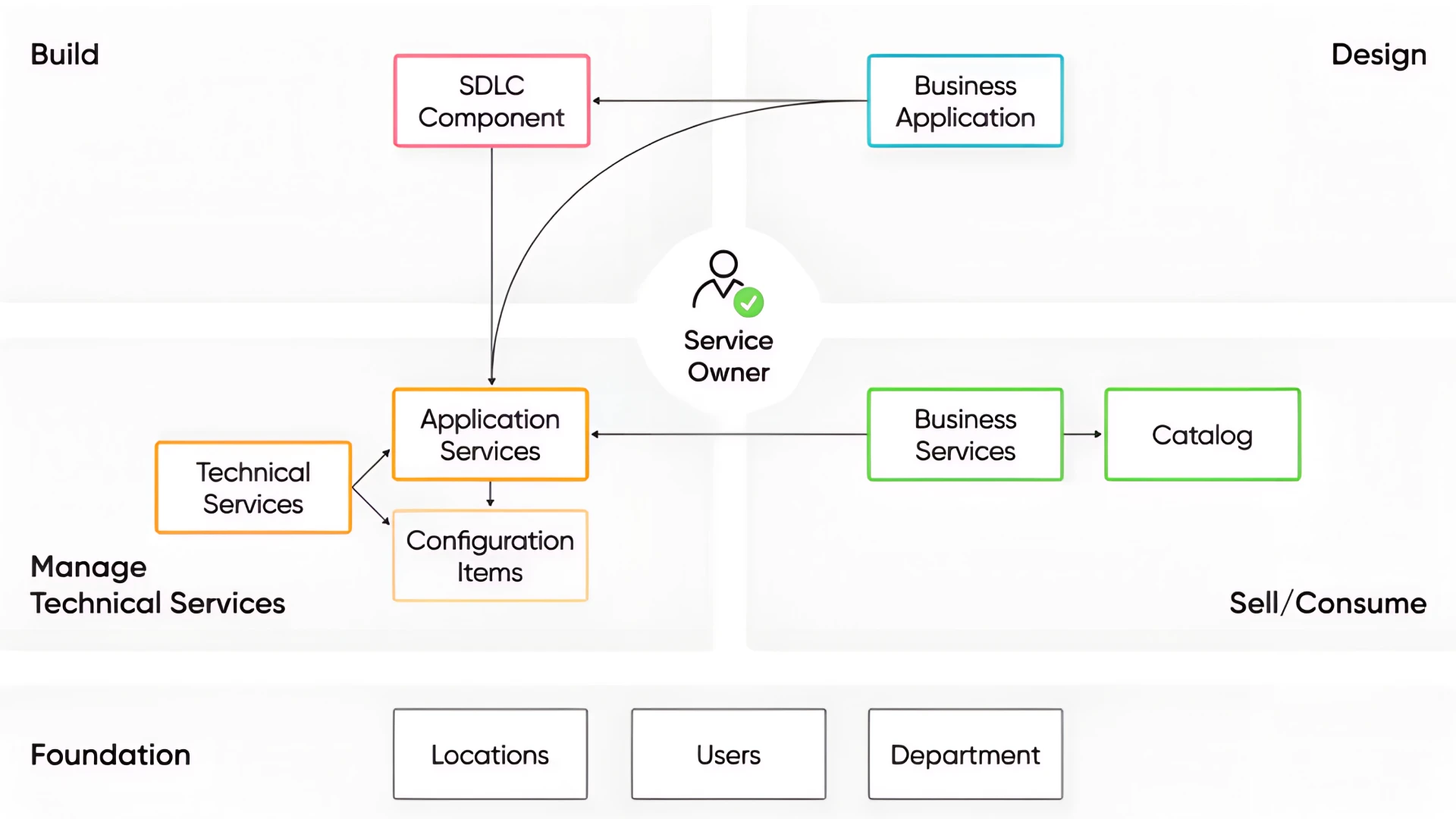
- Mapping Critical Dependencies: It can map complex network topologies, showing how a small change to a physical server can impact a business service miles away.
- Rigor and Compliance: It is the ideal tool for highly regulated industries where every asset must be documented under rigorous audit processes.
1.2. How Atlassian Has Stepped Up Its Game in CMDB and Asset Management
Historically, Atlassian’s limitation in ITSM wasn’t ticket management, but context management. Today, native asset integration enables what was once exclusive to heavy-duty systems, but with a more dynamic approach. Thanks to its partnership with Lansweeper, Atlassian solves the problem of “theoretical” data:
- Automatic discovery: Real visibility into IT, OT, and cloud assets without the cumbersome configuration of traditional discovery agents.
- Live data: Atlassian provides an asset inventory linked to the real context of ticket resolution, prioritizing utility for the agent over the bureaucracy of record-keeping. When any type of alert occurs, the Rovo Ops agent integrated with Assets allows agents to investigate possible causes and perform a real-world impact analysis before implementing critical changes, reducing the risk of service outages.
This offers particular potential for certain sectors, such as manufacturing, which use a type of equipment known as Operational Technology (OT). In these cases, Lansweeper’s asset discovery clearly outperforms ServiceNow’s.
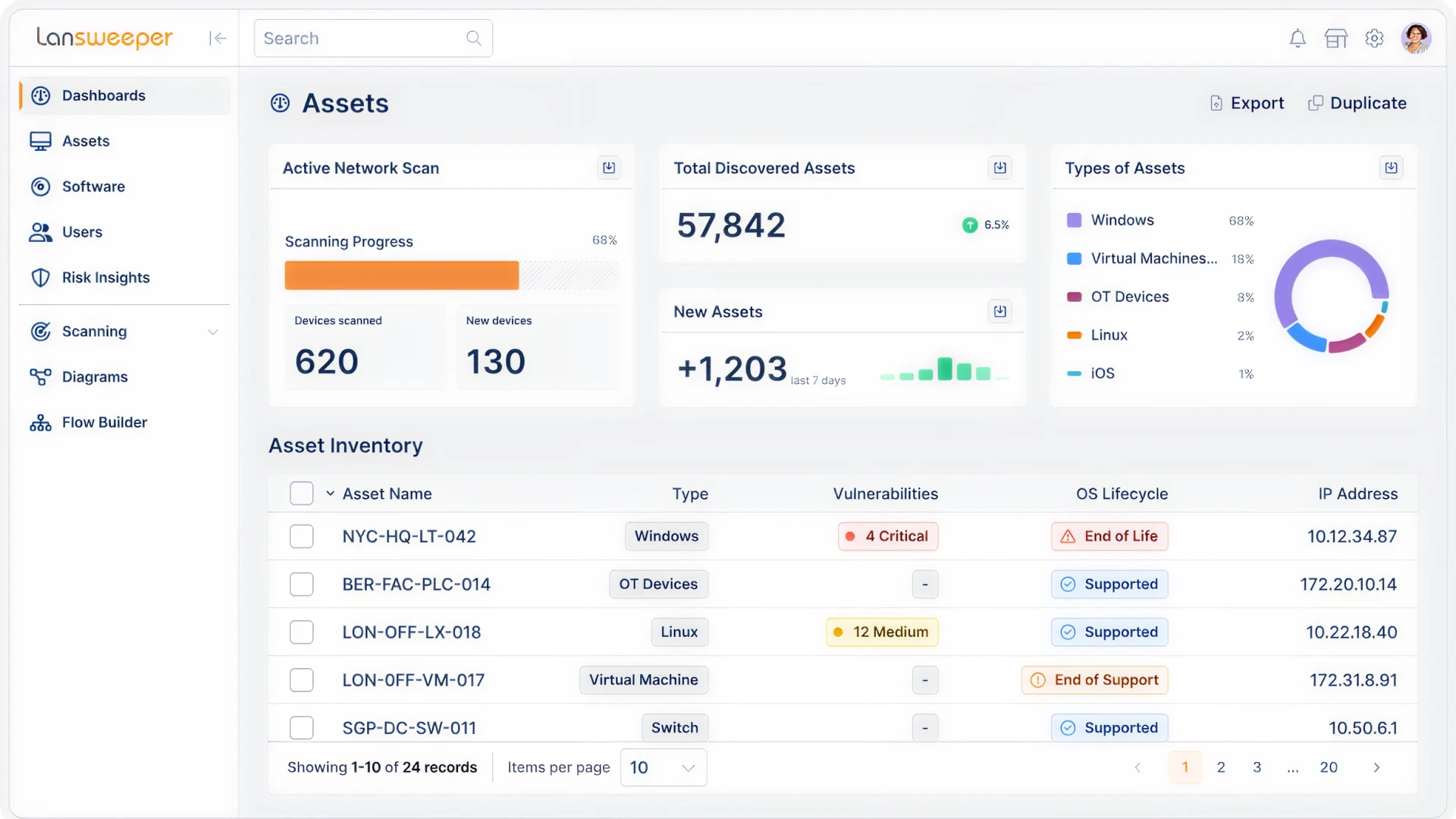
The bottom line for management is clear: accurate impact analysis, smarter automation, and, above all, the assurance that strategic decisions are based on the actual infrastructure, not on a theoretical snapshot of the past.
2. Data & Analytics: Leveraging ServiceNow’s unified database versus creating dashboards in seconds with Atlassian Analytics and the Teamwork Graph
2.1. ServiceNow’s Analytics and Reporting Proposal: Leveraging the Database
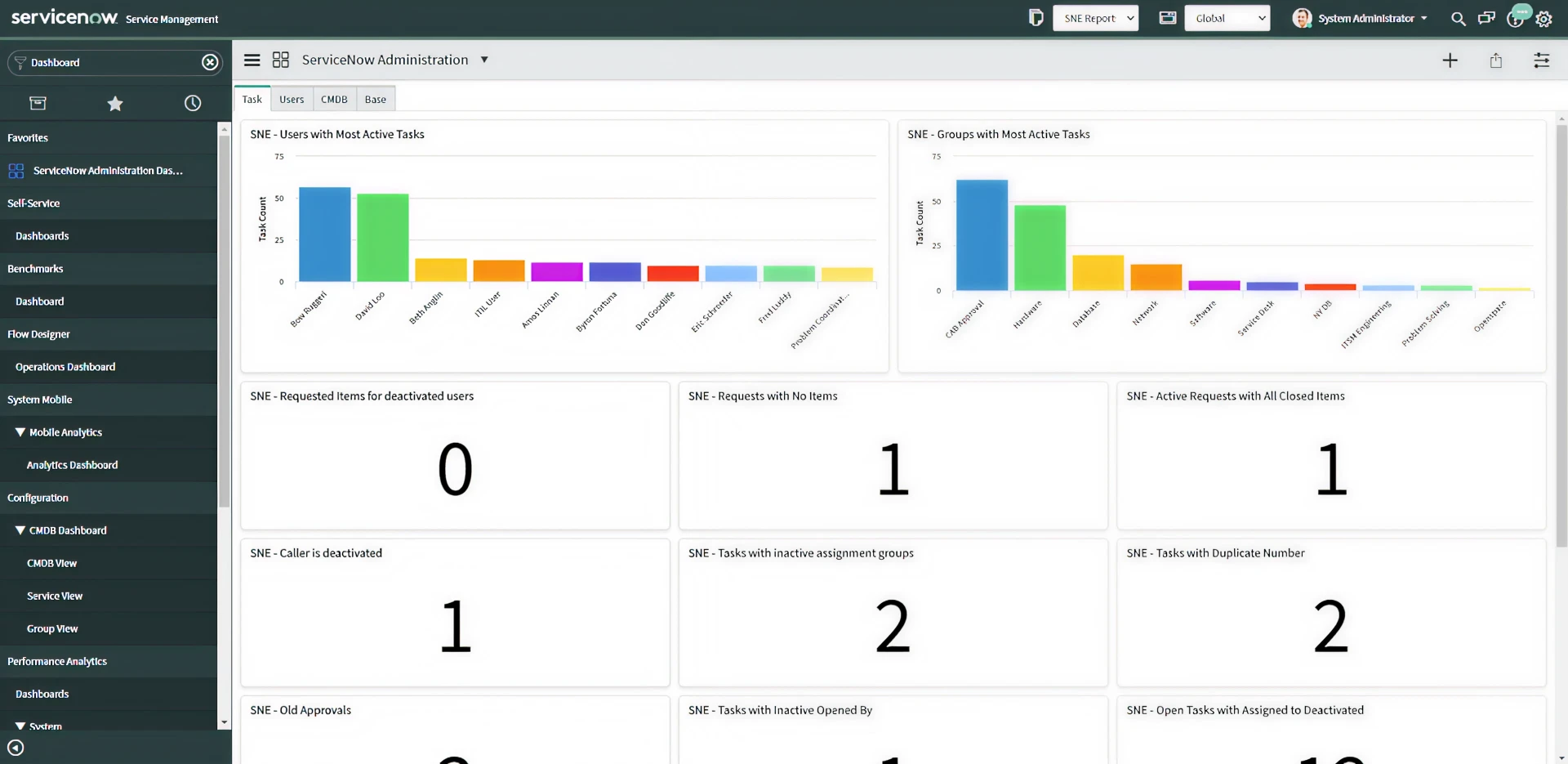
With a single database designed to capture all information about a company’s assets—from employee profiles to the most remote server—the ability to generate reports with trends and projections without needing to connect to external business intelligence tools is, on paper, impressive.
- Performance Analytics: ServiceNow offers a highly detailed historical and predictive view, ideal for executives who need to see the “big picture” of the organization.
- The Price of Complexity: However, this “data cathedral” requires constant maintenance. For a report to be reliable, all tables must be perfectly populated. Extracting a KPI that crosses data from different modules typically requires the expertise of skilled administrators or BI developers, making the process of gaining insights slow and centralized.
2.2. Atlassian’s Analytics and Reporting Solution
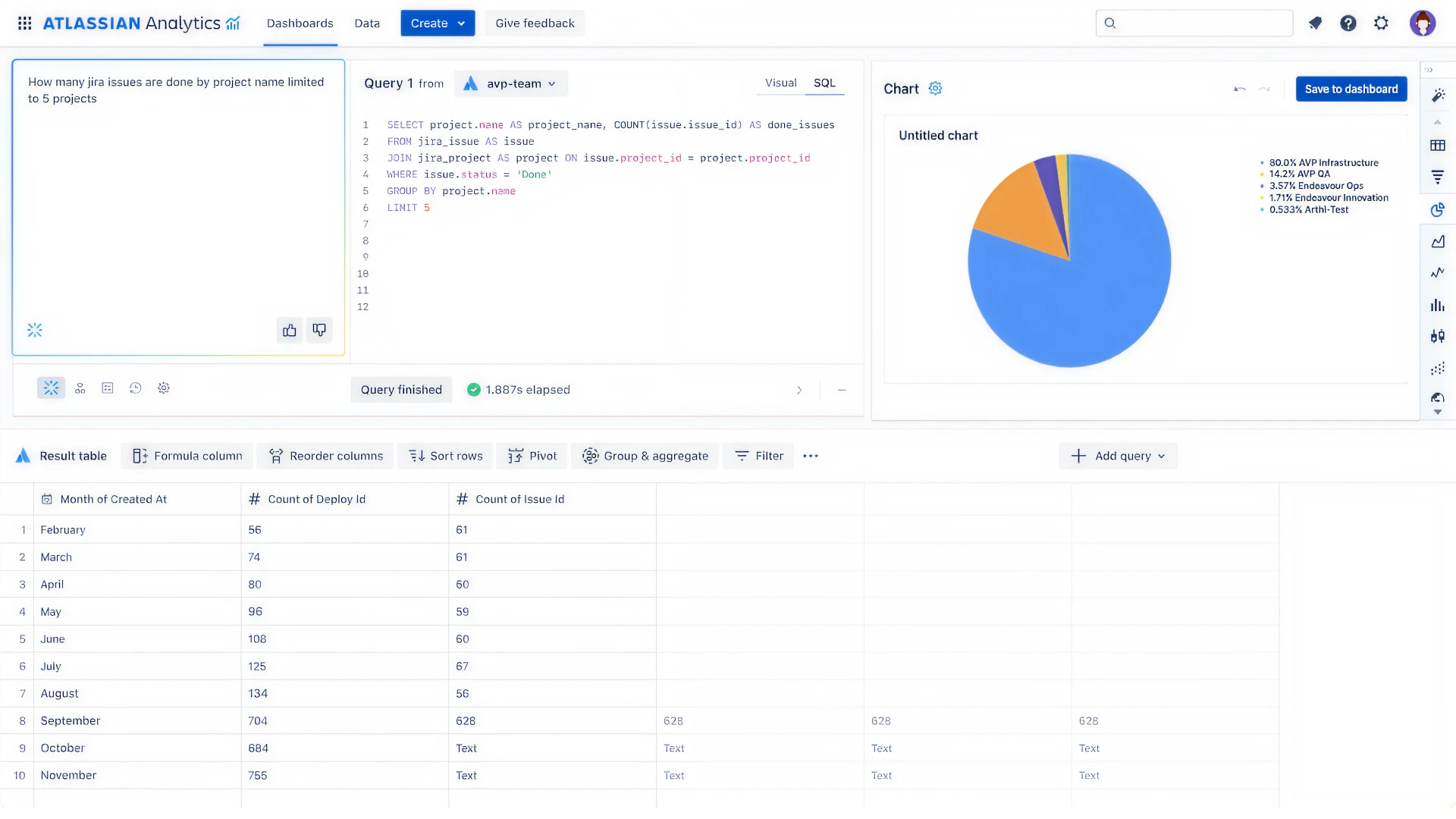
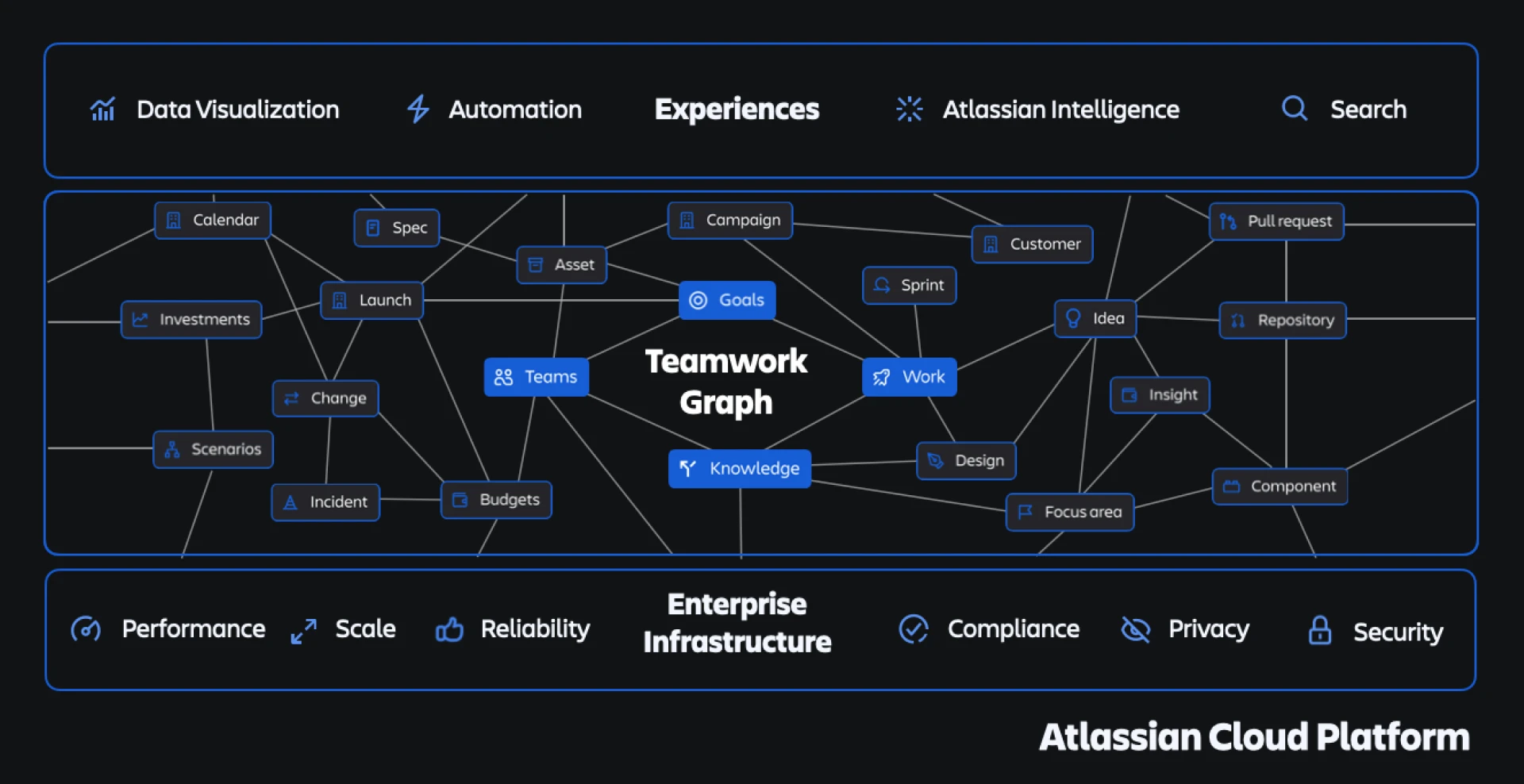
Atlassian’s evolution transforms traditional reporting into a strategic decision-making layer. With the integration of Atlassian Analytics and the Teamwork Graph, data analysis shifts from being a supporting tool to becoming the value driver that propels ITSM toward an intelligent, connected, and high-performance model.
Three key differentiating advantages stand out:
- ITSM + DevOps: The ability to connect what happens in support with what happens in development (Jira Software).
- End-to-End View: Thanks to the Teamwork Graph, Atlassian natively connects people, processes, and data. As Forrester points out, this AI-powered capability is redefining collaboration, enabling immediate access to critical information.
- Accessibility: While in ServiceNow, extracting a complex report typically requires an expert in the tool, Analytics democratizes access to data, allowing teams to generate queries for their dashboards using natural language. Reporting in seconds versus the weeks it takes with ServiceNow.
3. AI and automation: from ServiceNow’s extremely expensive orchestration to Rovo’s intelligent agents
ServiceNow’s AI offering comes with prohibitive pricing and is affordable only to those willing to pay several million dollars per thousand users. You have to be absolutely certain that you’ll get your money’s worth.
3.1. ServiceNow’s artificial intelligence solution: agents that execute workflows autonomously
ServiceNow has offered machine learning capabilities for years that enable predictions based on trends.
Now Assist, its generative AI solution, takes things several steps further by enabling large-scale workflow orchestration (Playbooks) through autonomous intelligent agents.
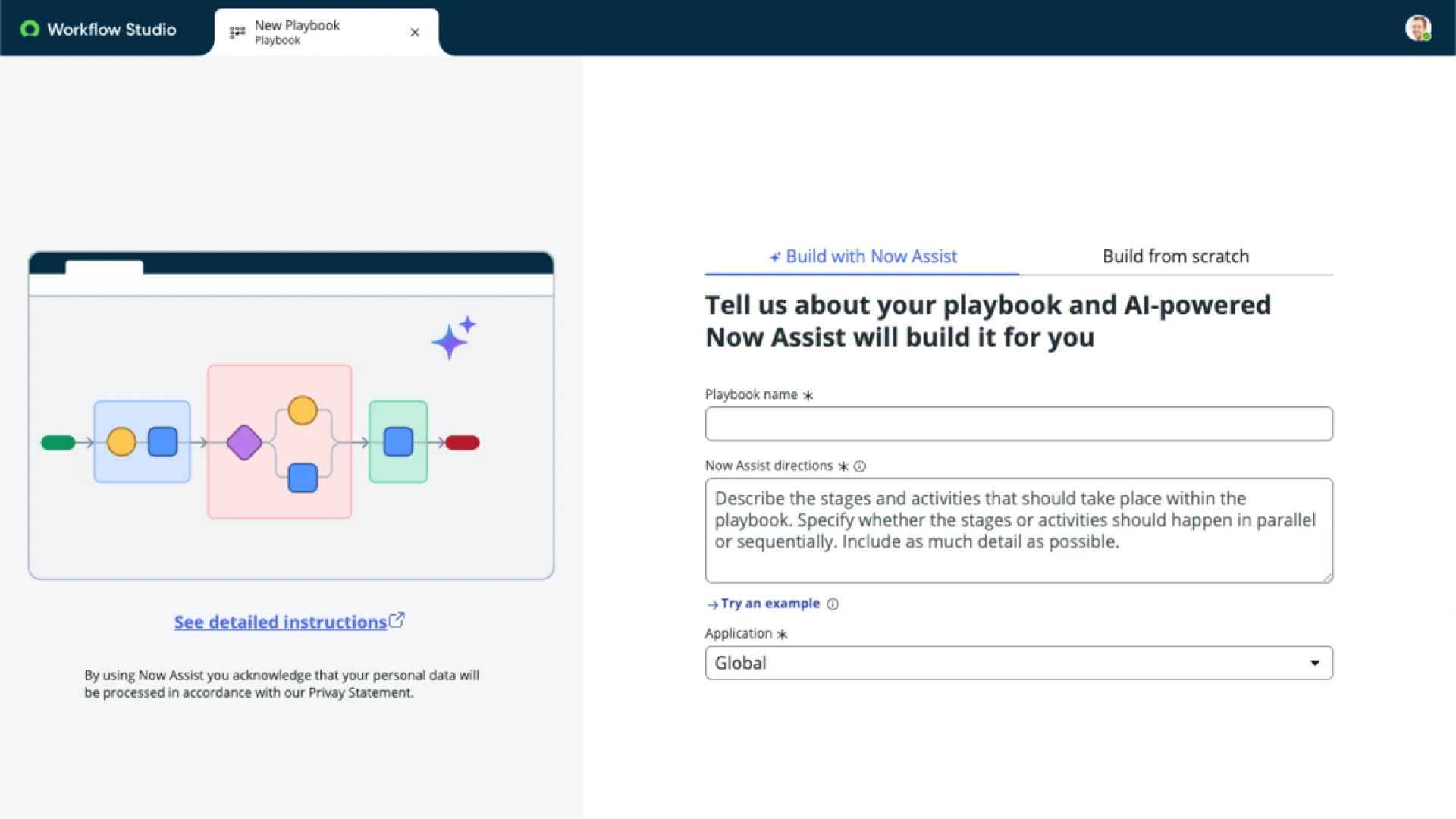
For example, it is possible to create a ServiceNow agent that, upon receiving an alert, checks which components are affected, reviews dependencies, and automatically restarts the component that has gone down to restore service. With just a single checkbox, you can configure the agent to complete the task unsupervised or to perform its work only after human validation.
However, this approach suffers from all of ServiceNow’s traditional issues. Setting up an agent of this type is not easy, it’s not within everyone’s reach, and it’s not simple to maintain. ServiceNow’s documentation and marketing may make it seem otherwise, since it’s possible to create Playbooks with just a few prompts… but, of course, they’ll only work if all related services, data, and integrations are well maintained.
To make matters worse, Now Assist’s pricing is often prohibitive: with thousands of additional dollars per user per year, it’s a marvel only within reach of those willing to pay around an extra million dollars for every thousand users. You have to be absolutely certain you’ll get your money’s worth.
3.2. Atlassian’s AI solution: a cross-functional and dynamic experience that transforms collaboration
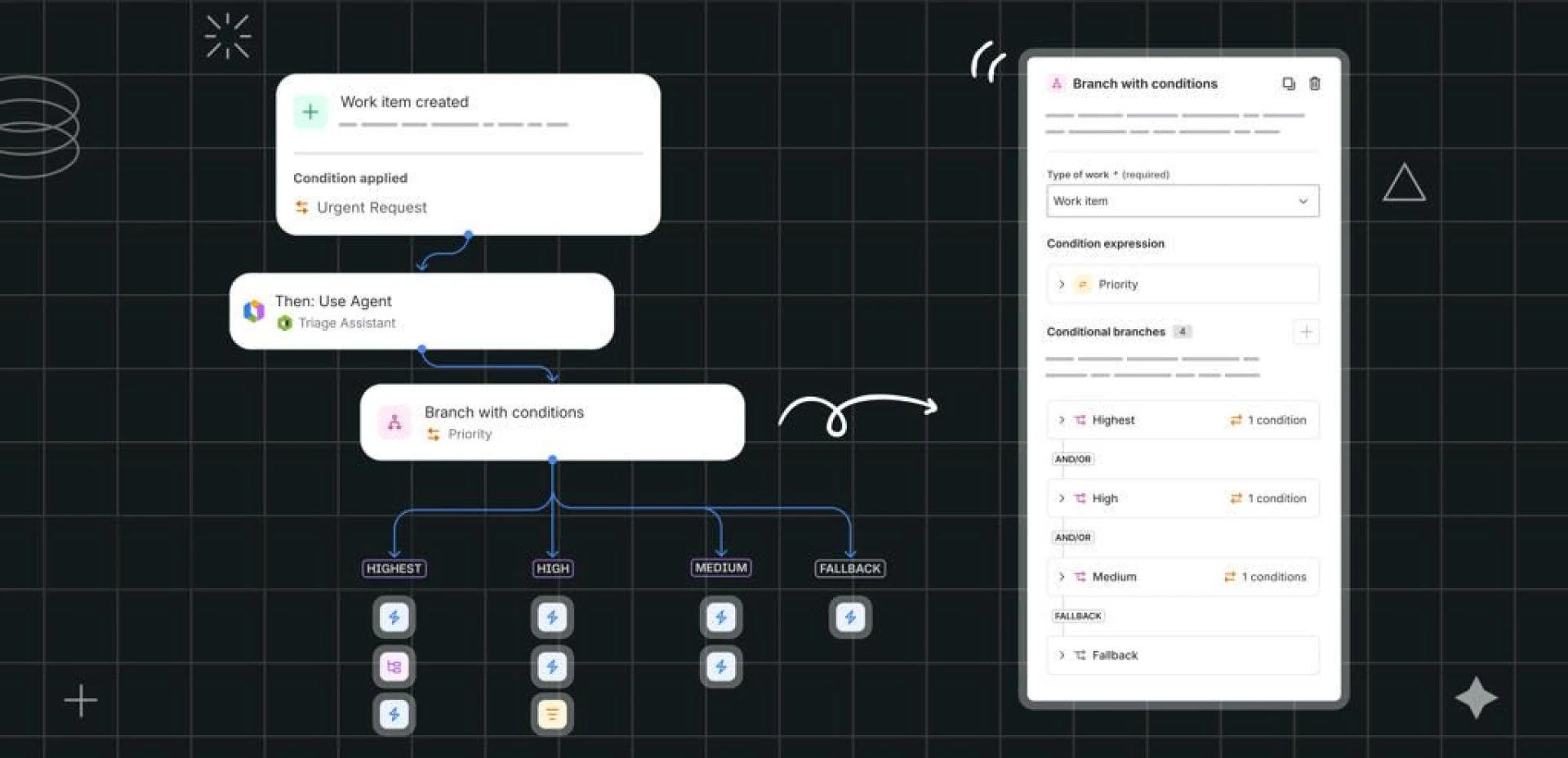
Although Atlassian is also launching autonomous agents capable of performing specific tasks, Rovo stands out as a reinforcement of the Australian brand’s core strengths: collaboration and teamwork. It is a cross-functional layer that integrates three key elements:
- Advanced search: For many years, searching for something in Jira did not allow users to find relevant items in Confluence. Rovo’s search is a platform-wide experience that has solved this problem once and for all, ensuring you always find the most relevant information.
- No-code automation: The combination of deterministic no-code automation rules and Rovo agents allows you to build workflows that offer the best of both worlds, maintaining team autonomy and the ability to innovate, test, and roll out changes quickly.
- Operational support: The Service Collection’s specialized support and ITOps agents are the best teammates a team can have: they eliminate repetitive tasks, drastically reduce time to resolution, and make the CFO happy because, after all, they lower the team’s operational costs. It’s not about downsizing the team, but about achieving excellence and doing more and better without burning out our agents.
And to top it all off, Rovo comes at no extra cost—it’s free for all paying Service Collection customers.
No matter where you are or how much you pay for your licenses, Rovo can always help you by identifying tasks, summarizing projects, reconstructing context, or reminding you of mandatory policies and frameworks.
At Sngular, in fact, over the past year and a half we’ve gained extensive experience supporting our clients’ PMOs, enabling agents that can be consulted to assist with onboarding new team members, providing the most appropriate project templates, and reviewing documentation to refine it and avoid inconsistencies.
In line with the platform’s overall values, creating new agents in Rovo is truly fast and simple, accessible to everyone, as you can see in this article about Rovo Studio.
Three Questions to Help You Choose Between ServiceNow and Atlassian Service Collection
Now that you’re familiar with Atlassian’s innovations in service management, it’s crucial to understand which tool fits your specific context. Every organization has different levels of maturity and needs, so reducing the decision to “complex vs. simple” is a mistake. The choice should be based on how your organization operates today and how it wants to operate in the future.
The table below should help you answer three critical questions:
- Does ServiceNow provide enough value for what we’re paying?
- What percentage of the platform have teams actually adopted?
- Can we support those processes with the Atlassian Service Collection?
| Strategic Approach | Atlassian Service Collection | ServiceNow | Value Analysis |
| Financial Transparency | ✅ | ❌ | ServiceNow has hidden costs and a lack of transparency regarding license scaling. |
| Quick training | ✅ | ❌ | Atlassian enables faster and more effective adoption. ServiceNow requires certified experts. |
| DevSecOps Alignment | ✅ | ❌ | Atlassian breaks down the barriers between Support and Development out of the box. |
| Asset Management (CMDB) | ✅ | ✅ | ServiceNow excels at in-depth analysis and mapping of theoretical dependencies. Atlassian prioritizes a dynamic CMDB that is linked to the actual resolution context. |
| Scalability (ESM) | ✅ | ✅ | Atlassian allows you to digitize departments (HR/Legal) in a matter of weeks. ServiceNow requires long-term consulting projects. |
| AI | ✅ | ✅ | Now Assist is very powerful, but it comes at a prohibitive cost. Rovo adds value for any user at no extra cost. |
| Talent Retention | ✅ | ⚠️ | Teams prefer modern tools; the bureaucracy of ServiceNow can be frustrating. |
| GRC Compliance / Audit | ❌ | ✅ | For highly regulated industries, ServiceNow is the gold standard. |
Are you ready to determine which tool is the best fit for your organization?
At Sngular, we help you understand the TCO (Total Cost of Ownership) of ServiceNow compared to the Atlassian Service Collection. This comparison will allow you to analyze the costs and benefits of each solution. Contact us for a free consultation, and together we’ll review your specific needs and how each option can align with your goals.
¿ServiceNow or Atlassian Service Collection?
We’ll assess your specific needs to help you find the perfect tool for you. Contact us for a free consultation!