Atlassian adopts Usage-Based Pricing (UBP): Key takeaways and impact
Atlassian is adopting Usage-Based Pricing (UBP)
Atlassian will adopt the Usage-Based Pricing (UBP) billing model on December 3, 2026, transforming the traditional per-user scheme into actual usage measurements. This change directly affects tools such as Jira, Confluence, Bitbucket, and the advanced Artificial Intelligence features in Rovo. During this transition period, companies can monitor their spending without additional overage costs, optimizing their automation rules and centralized resource management. At Sngular, we help organizations audit their Cloud environments, adjust included quotas, and prevent budget overruns before the deadline. Understanding the new Rovo credits, automation steps, and Zero-Touch resolution allows IT teams to maintain operational control and scale their platforms efficiently without final invoice surprises
Why is Atlassian’s licensing model changing to UBP?
In recent months, many of our clients have been asking us the same question: When will Atlassian start charging for Rovo usage and how much will credits cost?
While the free inclusion of Rovo in all paid plans for Atlassian tools is quite recent, the generative AI market hasn’t stopped moving in the opposite direction: flat-rate subscriptions from a couple of years ago have been disappearing, and major LLMs charge proportionally based on token consumption.
In this context, organizations’ concerns are more than justified: the entire ecosystem knew that it was only a matter of time before Rovo earned a consumption price tag. This awareness has hindered many adoption initiatives over these past months, as it was impossible to predict how much they would eventually cost.
The good news is we can clear up some of these unknowns, with additional details following in the coming weeks.
The first key datapoint is the cutoff date: starting December 3, 2026, the new Usage-Based Pricing (UBP) model will come into effect.
Until then, you will be able to see how many credits are being consumed, but Atlassian won’t charge a single cent.
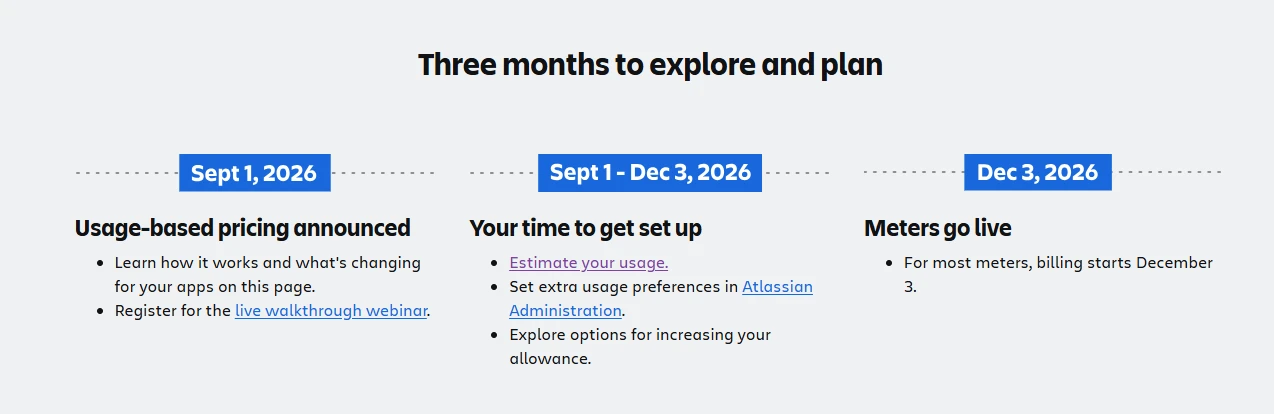
This change directly affects how key capabilities are consumed and measured across its main Apps and Collections: Jira, Confluence, Bitbucket, Rovo, Service Collection, Teamwork Collection, etc.
From the Vendor Solutions team at Sngular, we break down what this new paradigm entails, how it impacts your platform management, and what actions you should take during the transition period offered by the company.
What does the Atlassian UBP model consist of?
To date, most Atlassian Cloud licenses were based primarily on a traditional user tier model (seat-based pricing) that is increasingly being questioned at a time of SaaS disruption.
The UBP model introduces consumption-based metering for advanced features, structured to maintain budget control and prevent costs from spiraling:
- Included Allowances: The different licensing plans will maintain a shared usage allowance at the organization level to provide value from day one. These allowances will be up to 10 times higher when purchasing collections.
- Full Limit Control: Organization administrators can set usage caps to prevent budget overruns.
- Evaluation Period: Until December 3, no additional charges will be applied for excess usage, allowing you to observe consumption patterns without passing on costs.
The 5 key areas of the new usage model
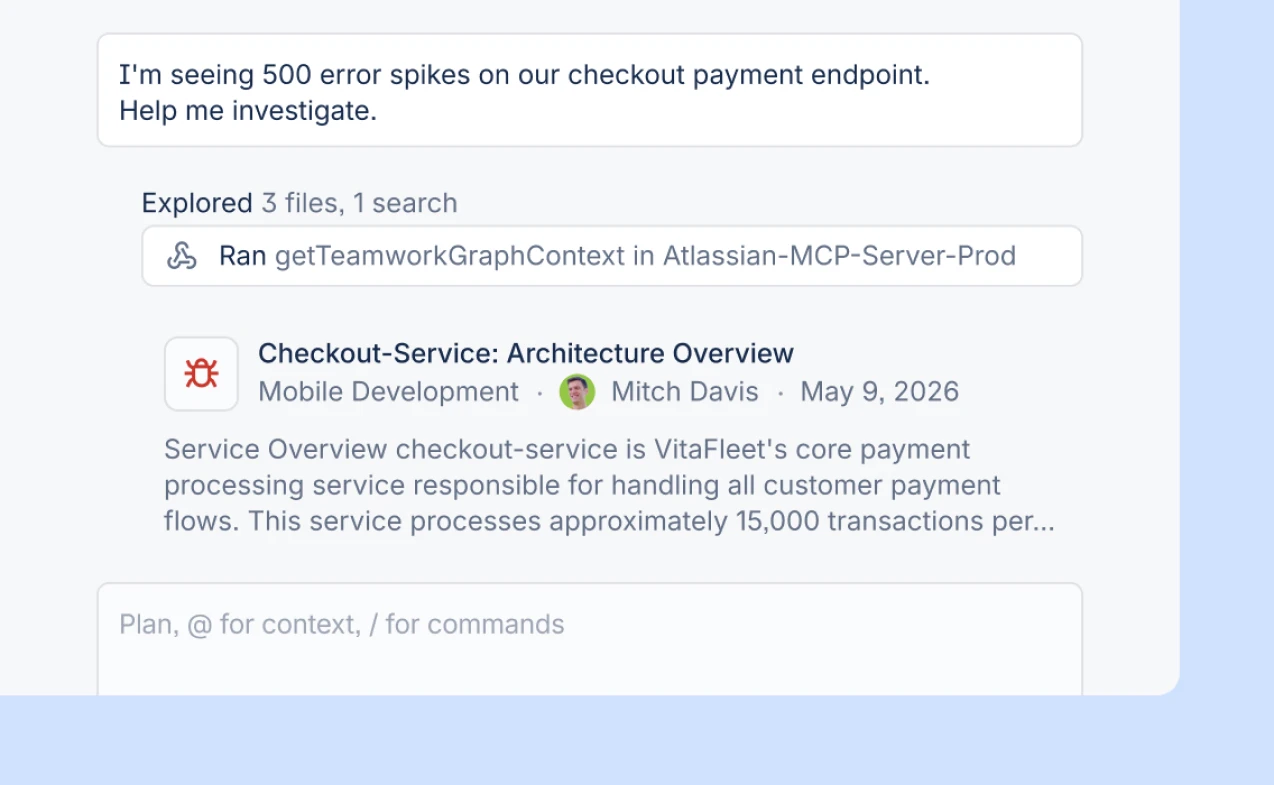
The new consumption-based billing is primarily structured around five pillars across Atlassian applications and collections:
- Rovo Credits (AI and Teamwork Graph):
Basic AI interactions will retain standard coverage, while advanced queries, specialized agent usage, and calls to the enriched Teamwork Graph API will use Rovo credits. - Automation Step Metrics (Automation Steps):
Automation consumption shifts from counting complete rule executions to measuring executed steps (Automation steps), allowing for a more detailed breakdown of usage for each workflow. - Centralized Assets Management:
Managing Assets objects (for Jira users and the Teamwork collection) will now be centralized in Atlassian Administration, applying volume counts beyond the included allowance limit. - AI Agent Resolutions (Customer Service Management):
In the Customer Service Management app within Service Collection, metrics will measure requests solved entirely by AI without human interaction. In short: CSM agents only charge you based on Zero-Touch Resolution metrics. - Governance and Resources in Bitbucket Cloud:
Metered Bitbucket resources (build minutes in Pipelines, storage in Git LFS, and Packages storage) will now be managed centrally at the organization level within Atlassian Administration (instead of per workspace).
Recommended steps to optimize your environment before December
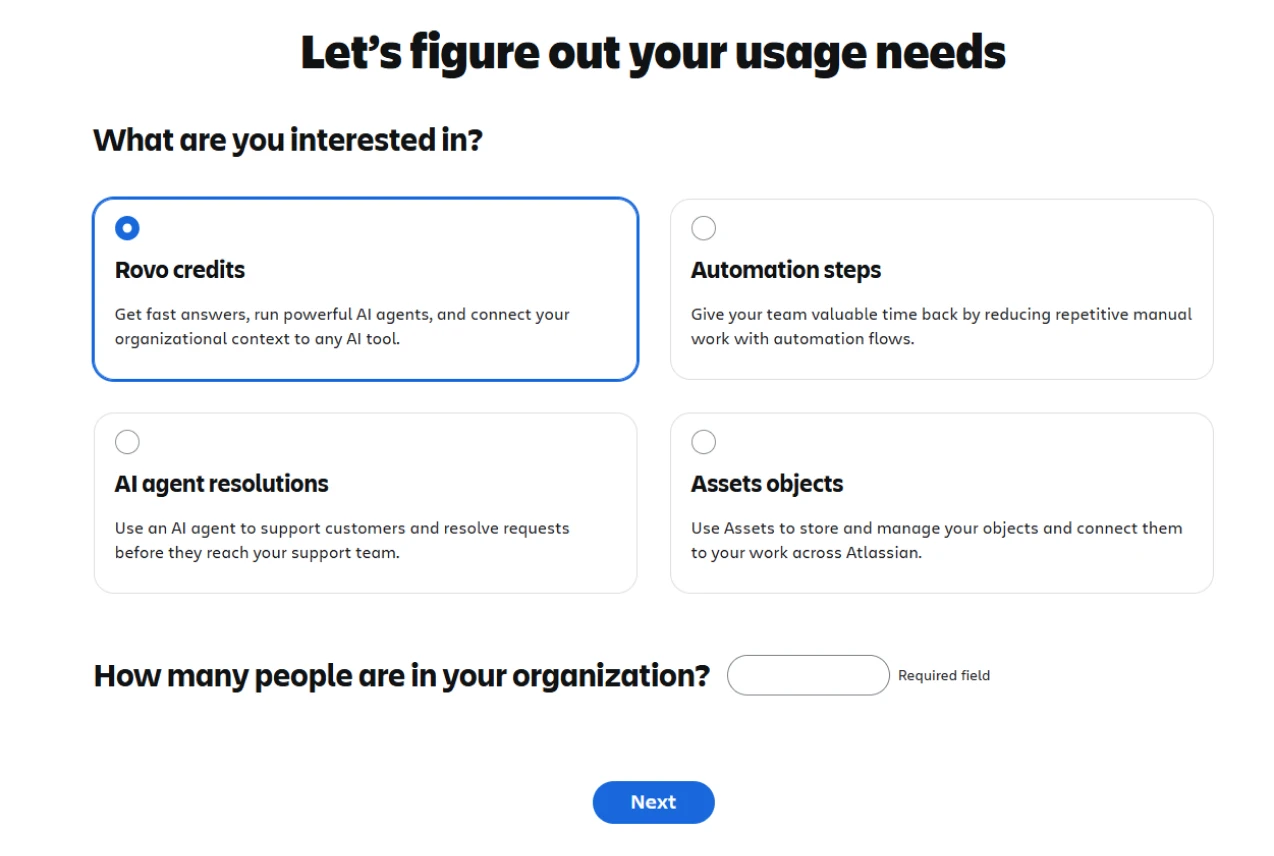
As already mentioned, there’s a three-month grace period to audit your platform and adjust your workflows before the new model takes effect:
- Check your usage dashboard: Access the platform usage dashboard in Atlassian Administration to analyze consumption trends for your organization.
- Audit your automation rules: Evaluate and simplify complex rules to optimize the number of automation steps executed across your projects.
- Consult pricing tables and calculators: You can review technical details, usage rate tables, and the estimation calculator on Atlassian’s Usage-Based Pricing resources portal.
- Set up limits and alerts: Define usage caps in the administration panel to receive notifications and ensure critical services continue running without interruption.
How we help you at Sngular
Moving to usage-based models offers great flexibility to scale capabilities on demand, but requires clear governance to ensure maximum efficiency and prevent overrunning your current budget.
Our Atlassian team can help you review your Cloud architecture, optimizing your automation rules, and estimating your Rovo and Assets consumption needs ahead of the deadline.
If you would like to analyze the impact on your organization, get in touch with our Vendor Solutions Sales team.