Enabling Secure Enterprise Integrations Across Complex Tool Ecosystems with Getint

Enabling Secure Enterprise Integrations Across Complex Tool Ecosystems with Getint
Today, enterprises rarely operate within a single platform. Engineering teams work in Jira or Azure DevOps, IT departments rely on ServiceNow, and business
stakeholders expect visibility across systems without switching between tools.
Individually, these platforms are powerful. The difficulty begins when work must
move reliably between them.
Without a structured integration layer, organizations fall back on manual updates, duplicated tickets, fragmented communication, and inconsistent reporting. Over time, this creates delivery delays, loss of traceability, and operational friction — particularly in large or regulated environments where governance and auditability are essential.
Getint was built to address this challenge: enabling secure, controlled, two-way
synchronization between enterprise systems without forcing teams to change
how they work.
Why Integration Becomes a Structural Requirement in Enterprise Environments
At a smaller scale, native connectors or simple API-based integrations may appear sufficient. However, as organizations grow, integration requirements become significantly more complex:
- Different teams own different systems
- Data must flow bi-directionally, not just one way
- Only selected fields, statuses, comments, or attachments should be shared
- Security and compliance policies restrict deployment options
- Systems evolve during migration or transformation initiatives
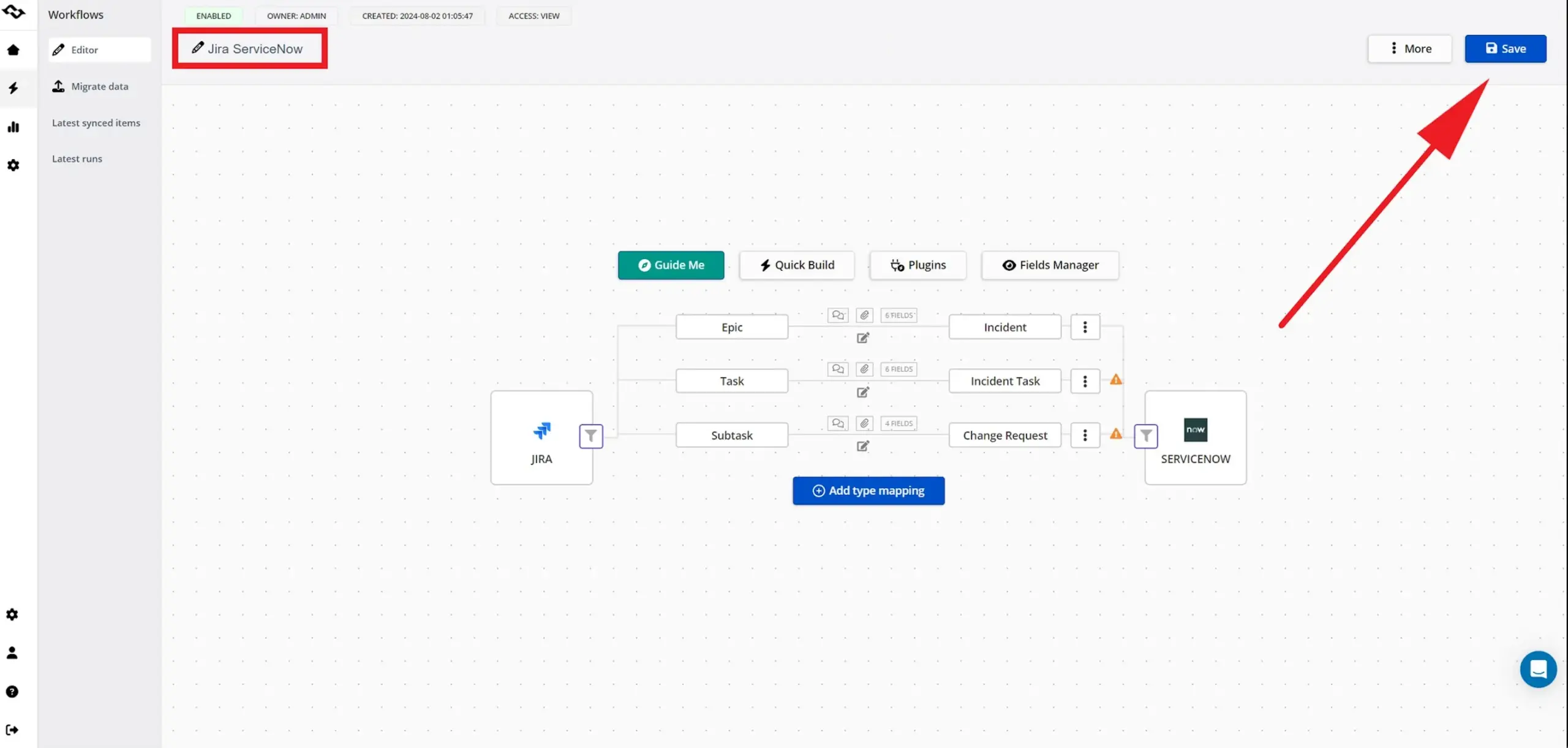
In many enterprises, this includes synchronizing platforms such as ServiceNow, and Jira Service Management, where incidents, requests, or changes must remain aligned across IT and development teams without duplicating effort.
In these scenarios, integration is no longer a convenience — it becomes operational infrastructure. When synchronization fails or behaves unpredictably, collaboration across departments weakens.
Enterprise-grade integration must therefore be predictable, transparent, and adaptable over time.
How Getint Delivers Enterprise-Grade Two-Way Synchronization
Getint provides a dedicated integration platform for work management and ITSM systems such as Jira, Jira Service Management, ServiceNow, Azure DevOps, Zendesk, and more.
Rather than offering generic automation flows, Getint focuses on structured synchronization designed specifically for complex enterprise ecosystems.
Core capabilities include:
- Two-way synchronization ensuring changes in one system are accurately reflected in another
- Granular field-level mapping, including custom fields, statuses, comments, and attachments
- Flexible deployment models, including SaaS, On-Premise, and hybrid configurations
- Transparent synchronization logic and detailed logging to support governance and audits
- Scalable architecture capable of supporting cross-team and cross-organization integrations
This approach allows enterprises to integrate systems in a way that scales with complexity instead of becoming fragile as requirements evolve.
Built with Enterprise Security and Compliance in Mind
Enterprise integration often involves sensitive operational and service management data. For that reason, governance and security must be foundational — not optional.
Getint is designed to meet enterprise security and compliance expectations from the start. The platform aligns with SOC 2 Type II, ISO 27001, and ISO 27018 standards and follows GDPR and CCPA-compliant data handling practices.
It supports encrypted data transfer, controlled synchronization rules, and deployment flexibility suitable for environments with strict data residency or infrastructure requirements. Detailed logs and predictable synchronization behavior ensure traceability and operational oversight.
By combining deep integration capabilities with security-first architecture, Getint supports organizations where reliability and compliance are non-negotiable.
Getint and Sngular: Supporting Structured Digital and ITSM Transformation
Enterprise transformation rarely happens inside a single tool. Organizations modernize their digital ecosystems gradually — introducing new platforms, evolving service management practices, and aligning processes across departments.
Sngular supports organizations undergoing structured digital transformation initiatives, strengthening capabilities in agile delivery, IT service management, and enterprise process evolution.
In companies refine their ITSM frameworks or align ServiceNow and Jira-based environments, maintaining synchronization between systems ensures continuity. Getint provides a stable integration layer that allows transformation to happen without disrupting operational workflows.
Together, this alignment enables organizations to:
- Maintain visibility across distributed toolchains
- Reduce manual coordination between service, development teams, and others
- Support phased platform evolution
- Preserve data integrity during ecosystem modernization
By combining integration stability with structured enablement and process maturity, enterprises can evolve their digital environments while maintaining control and governance.
Learn More About Getint
Getint is trusted by thousands of teams worldwide, including enterprises operating complex, multi-platform environments.
With strong roots in the Atlassian ecosystem and growing popularity in ServiceNow and other enterprise platforms, this integration platform supports organizations that need connections between tools to scale with their systems — not break down as they evolve.
To learn more about secure enterprise integrations, visit getint.io.